
Carving Calm: Micro‑Sanctuaries for Small Apartments
Today we dive into designing micro-sanctuaries in small apartments—intimate pockets of calm that fit between furniture and daily obligations. Expect practical layouts, sensory cues, and tiny rituals drawn from lived spaces, so your studio or compact home feels grounded, generous, and surprisingly restorative. Share a snapshot of your favorite quiet corner, ask questions about constraints you face, and subscribe for fresh small-space calm delivered weekly.



Finding Quiet Corners That Already Exist
Before buying anything, walk your home slowly and notice edges where the world softens: window ledges, the space behind a door, a sunlit floor patch near a bookcase. With small shifts in posture, light, and storage, those overlooked pockets can shelter focus, prayer, sketching, or silence.
Light, Color, and Texture for Instant Ease
Soft Layered Lighting Without Wiring
Use magnet-backed puck lights under shelves, lantern-style rechargeable lamps near seating, and a low-placed bulb behind plants for twilight glow. Diffuse everything with rice paper or linen shades, reducing harsh shadows that trigger alertness, and creating a forgiving, evening-like visual tempo all day.
Color Palettes That Steady Your Pulse
Begin with the existing floor tone and largest wall, sampling fabrics in daylight and evening light. Pair a moss or clay with a softened blue-gray, then add one joyful accent you can hide when overstimulated. Limit saturation near eye level to protect focus and breath.
Textures That Invite Slow Touch
Balance one nubby throw with a smooth linen runner and a cork tray under a mug. Mix matte ceramics with oiled wood, letting fingertips rest on edges. Textural variety tells the nervous system it is safe to wander, notice, and finally release.
Flexible Furniture That Doubles as Refuge
Foldaway Altars and Rolling Carts
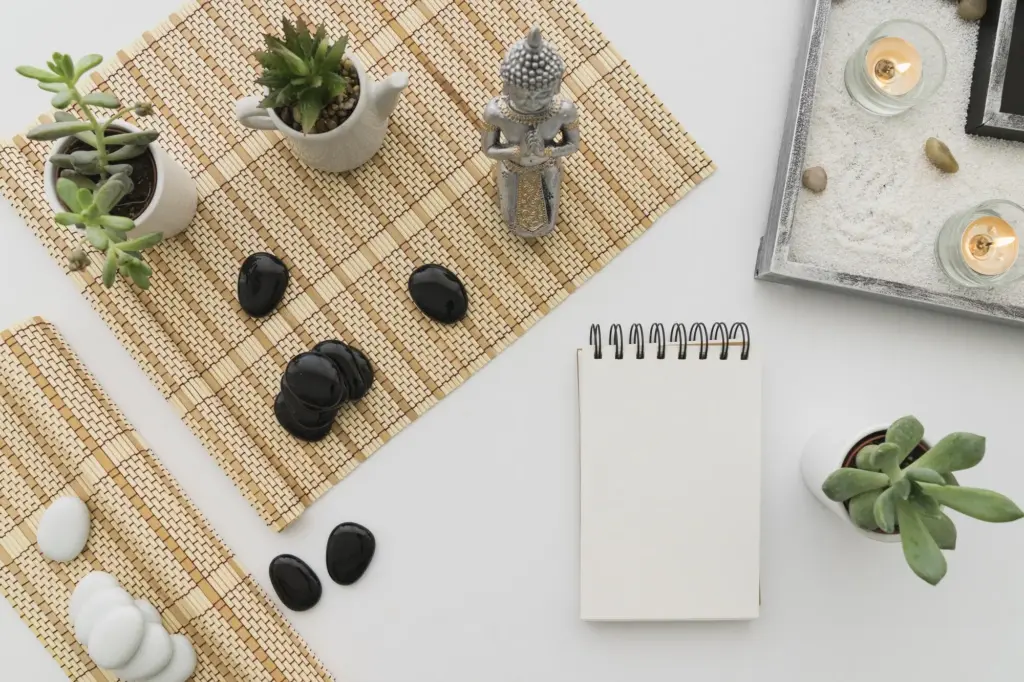
Dedicate the top shelf to a plant, matches, and a small object with meaning; middle shelf for kettle and cups; bottom for a blanket. Roll beside the sofa at dusk, then park in a closet, preserving sacred intent while keeping pathways airy and adaptable.
Screens and Shelves as Gentle Boundaries
Use an open-backed shelf or folding screen to borrow privacy without boxing the room. Place taller elements behind you for psychological protection. Leave upper sections airy, letting daylight thread through, so the boundary signals sanctuary while maintaining conversation, airflow, and generosity of sightlines.
Seating That Supports Stillness
Choose a low, firm cushion or a supportive chair with a lumbar pillow you love to see. Add a footrest to drop shoulders naturally. Mark the seat’s start with a small tray or book, inviting the body to remember rest as a practiced posture.

Quieting the City with Sound Masking
Place a small white-noise machine behind plants near the window, letting leaves diffuse the source. Combine with a thick curtain or rug to dampen reflections. Test volumes midday and night, seeking a level that softens edges without hiding conversation, doorbells, or necessary cues.

Aromas that Cue Rest and Focus
Choose natural oils sparingly and rotate to prevent nose fatigue. Diffuse citrus in the morning for momentum, then resinous woods after dinner for grounding. Keep wicks trimmed, open windows regularly, and reserve one scent only for reflection, training memory to escort you inward quickly.
Greenery, Air, and Tiny Water Features
Choose snake plant, ZZ, pothos, and philodendron for resilience where sun is brief. Water deeply, then rest them longer than you think. Wipe leaves monthly to help photosynthesis. A single trailing vine across a shelf can turn utility storage into a poetic, sheltering horizon.
If outdoor space is tiny, use a galvanized tray with river stones, herbs, and a folding stool. On stormy days, bring it inside to sit beside the glass. The ritual of assembling and returning the tray punctuates weeks with dependable, restorative micro-vacations.
Place a low ceramic bowl with water near a warm lamp, letting gentle evaporation ease dry air. Add a floating leaf or pebble to catch light. Alternatively, a whisper-quiet fountain near the sofa becomes a sonic anchor for reading, stretching, and unhurried calls.
Daily Habits That Keep the Sanctuary Alive
Spaces wilt without care, yet maintenance can feel lovely when tiny and rhythmic. Attach small resets to anchors you already do: boiling water, brushing teeth, opening curtains. Celebrate consistency over perfection, trusting gentle repetition to stack comfort, clarity, and welcoming energy into the smallest rooms.